
MOVIMENTO NEGRO EDUCADOR: EPISTEMOLOGICAL CHALLENGES AND ONGOING TRANSFORMATIONS EPISTEMOLOGICAL CHALLENGES AND ONGOING TRANSFORMATIONS
Barra lateral de artigos
Conteúdo do artigo principal
Resumo
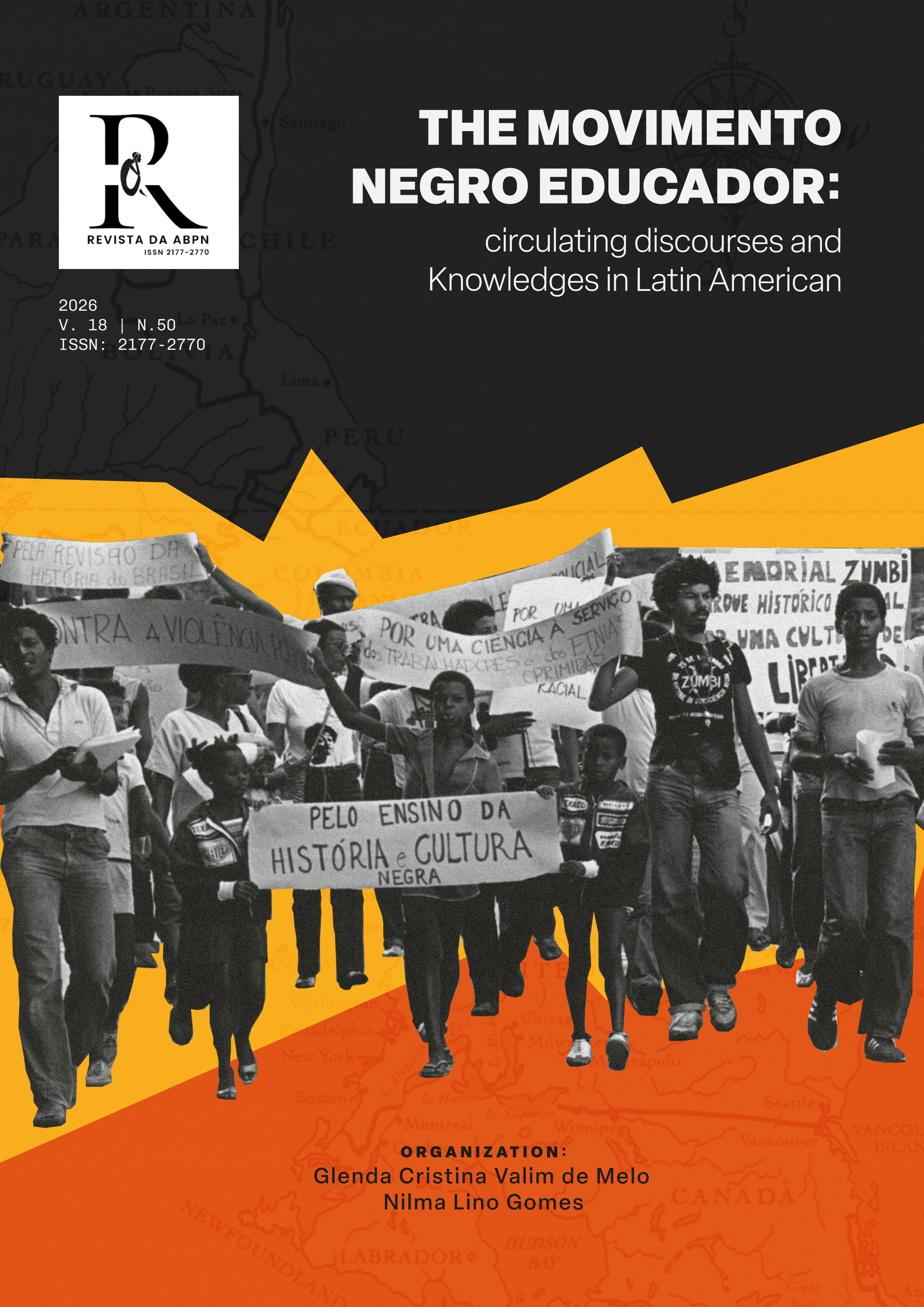
This collaborative interview features three Latin American researchers involved with the Movimento Negro Educador, exploring its influence in various fields such as psychology, language, the arts, and mathematics education in Uruguay, Brazil, and Colombia. The participants delve into their reflections on the Movimento Negro Educador as a transformative force in the educational and social fields, highlighting its role in promoting collective Afro-descendant subjectivities that value their cultural,mracial, and epistemic identities. This perspective illustrates the multifaceted impact of the movement—political, educational, linguistic, cultural, and psychological—and its potential to reshape social imaginaries throughout Latin America. The dialogue reveals shared commitments to the need for the decolonization of bodies, minds, and epistemes and to the creation of inclusive pedagogical practices that work to deconstruct the
privileges of whiteness and promote a more egalitarian democracy. Thus, together, the researchers reinforce the potential of the Movimento Negro Educador to act as a space for resistance, empowerment, and re-education that promotes the deconstruction of
hierarchies, the valorization of non-Eurocentric knowledge, and the construction of a more pluralistic and just society.
Detalhes do artigo

Este trabalho está licenciado sob uma licença Creative Commons Attribution 4.0 International License.
- Autores mantém os direitos autorais e concedem à revista o direito de primeira publicação, com o trabalho simultaneamente licenciado sob a Creative Commons Attribution License CC-BY 4.0 que permitindo o compartilhamento do trabalho com reconhecimento da autoria do trabalho e publicação inicial nesta revista.
- Autores têm autorização para assumir contratos adicionais separadamente, para distribuição não-exclusiva da versão do trabalho publicada nesta revista (ex.: publicar em repositório institucional ou como capítulo de livro), com reconhecimento de autoria e publicação inicial nesta revista.
- Autores têm permissão e são estimulados a publicar e distribuir seu trabalho online (ex.: em repositórios institucionais ou na sua página pessoal) a qualquer ponto antes ou durante o processo editorial, já que isso pode gerar alterações produtivas, bem como aumentar o impacto e a citação do trabalho publicado (Veja O Efeito do Acesso Livre).